- More than 20 years experience
- Complete assessments
- No agency fees


Part Two of Three
In the first article of this series, we explored how access to specialised expertise is becoming one of the semiconductor industry's most important strategic considerations. As investment accelerates across artificial intelligence, advanced manufacturing, automotive technology and digital infrastructure, the conversation has evolved beyond manufacturing capacity and technology leadership. Increasingly, it is about people.
Today, that challenge is no longer theoretical.
Across the Dutch and European semiconductor ecosystem, organisations are experiencing the operational consequences of a workforce that cannot expand as quickly as the industry itself. Hiring cycles are becoming longer, experienced engineers are increasingly difficult to attract, and technical knowledge is becoming concentrated within a limited number of specialists.
The question facing leadership teams is therefore changing.
It is no longer whether talent has become a constraint. It is how organisations continue to innovate when access to specialised expertise cannot keep pace with market demand.

Few countries illustrate this challenge more clearly than the Netherlands.
The Dutch semiconductor ecosystem continues to attract investment, supported by globally recognised innovation hubs such as Brainport Eindhoven and a strong collaboration between industry, academia and government. Yet success has also intensified competition for highly specialised talent.
According to Brainport Eindhoven, the Netherlands is expected to require approximately 38,000 additional semiconductor professionals over the next five years, while the Brainport region alone anticipates around 26,000 vacancies across the semiconductor value chain. These figures reflect not only industry growth but also the increasing complexity of semiconductor technologies and the skills required to support them.
Professor Maarten Steinbuch, Scientific Director of the Eindhoven AI Systems Institute and one of the Netherlands' leading voices on technology and innovation, has repeatedly emphasised that talent has become one of the defining challenges for the sector. Discussing initiatives such as Project Beethoven, he noted that although significant investments are being made to strengthen the Dutch talent pipeline, demand continues to outpace supply.
The challenge, therefore, is not a lack of ambition. It is the simple reality that developing experienced semiconductor professionals takes time.
Unlike manufacturing capacity, expertise cannot be scaled overnight.
Long hiring cycles have become an accepted reality across much of the semiconductor industry. However, the true cost often extends far beyond an unfilled vacancy.
When organisations spend months searching for highly specialised engineers, project milestones can shift, product development slows and existing engineering teams absorb additional responsibilities. Senior specialists frequently divide their time between technical work, mentoring colleagues, interviewing candidates and maintaining increasingly complex development environments.
Over time, these pressures influence more than productivity.
They affect an organisation's ability to innovate.
Deloitte's 2025 Global Semiconductor Industry Outlook identifies workforce availability as one of the industry's most significant long-term business challenges, noting that attracting, developing and retaining skilled professionals has become increasingly critical as advanced technologies continue to evolve.
For leadership teams, workforce planning is no longer simply an operational responsibility. It has become a strategic capability.
Another workforce challenge receives considerably less attention.
Many semiconductor organisations rely on a relatively small number of engineers who possess years of accumulated technical knowledge. Whether working in verification, physical design, process integration, packaging or manufacturing optimisation, these specialists often carry expertise that extends well beyond documented processes.
When experienced professionals retire, relocate or pursue new opportunities, organisations lose more than headcount.
They lose context.
They lose practical knowledge developed through years of product development, customer collaboration and manufacturing experience.
As semiconductor technologies become increasingly sophisticated, preserving this institutional knowledge is becoming just as important as recruiting new talent.
The workforce discussion is therefore expanding.
It is no longer only about attracting engineers, but also about ensuring knowledge continuity across the organisation.
 (1).jpg&Crop=7&Format=webp&Quality=90&Compression=80&Width=1200)

The semiconductor labour market has also become significantly more international.
Dutch organisations are no longer competing solely with neighbouring companies in Eindhoven, Delft or Nijmegen. The same engineers are increasingly being approached by employers across Germany, Ireland, the United States, Taiwan, Singapore and other rapidly expanding semiconductor markets.
At the same time, governments around the world continue investing heavily in domestic semiconductor ecosystems, further increasing demand for experienced professionals.
This creates a structural challenge.
The pool of highly specialised semiconductor engineers is growing, but demand is growing even faster.
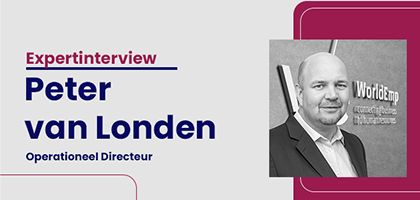
As Maarten Steinbuch observed during his discussion with WorldEmp, "Businesses want to move forward, to innovate, but that's not possible if you lack the people. And if you're not progressing, you're falling behind in the global market."
His observation captures a broader shift taking place across the industry. Access to expertise is becoming directly linked to competitiveness.
These developments are encouraging semiconductor organisations to rethink how engineering capability is built.
Traditional recruitment remains essential, but increasingly it is complemented by broader workforce strategies. International collaboration, distributed engineering teams and globally connected R&D organisations are becoming more common across the semiconductor industry, enabling organisations to access specialised expertise while maintaining engineering quality and business continuity.
This represents an important change in mindset.
Rather than asking where talent can be found, leadership teams are increasingly considering how expertise can remain continuously available throughout the lifecycle of increasingly complex technologies.
The organisations best positioned for long-term growth may not simply be those that recruit the fastest.
They may be those that build the most resilient engineering ecosystems.

Throughout its history, the semiconductor industry has repeatedly overcome technical barriers through innovation, collaboration and long-term investment.
The next challenge is different.
It is ensuring that engineering capability grows alongside technological ambition.
As the industry continues expanding, workforce resilience will increasingly influence innovation capacity, operational continuity and competitive advantage. Organisations that treat access to specialised expertise as a strategic priority—not simply a recruitment objective—will be better positioned to sustain growth in an increasingly competitive global market.
At WorldEmp, these conversations are becoming increasingly common among technology leaders across Europe. Through partnerships with companies building distributed engineering teams, we see a growing shift towards workforce models that combine local leadership with global expertise, enabling organisations to scale without compromising quality, continuity or control.
As part of this ongoing dialogue, WorldEmp will also be attending SEMICON India 2026, where industry leaders from across the semiconductor ecosystem will come together to discuss the future of chip design, manufacturing, supply chains and, increasingly, talent. The event reflects a broader industry reality: solving the semiconductor talent challenge will require collaboration that extends beyond borders.
In the final article of this series, we will explore how dedicated global engineering teams are helping semiconductor organisations build workforce resilience, why the Digital Knowledge Migrant (DKM) model is gaining relevance, and how companies can strengthen engineering capacity while keeping their teams focused on innovation.